Writing “Euro” in Cyrillic or a successful battle of Bulgarian diplomacy in the first year of EU membership
Biserka Benisheva
Immediately after its accession to the European Union, Bulgaria joined the discussions on the reform of the EU Treaty.
After the failed ratification of The draft EU Constitution of referendums in the Netherlands and France in 2005 and long-term consultations between Member States, in the next period, in mid-June 2007 d. An agreement was reached to open negotiations on the reform of the EU Treaties. At the European Council meeting on 21-22 June 2007, a decision was made to schedule an intergovernmental conference and a mandate was adopted for negotiations on the amendment of the EU Treaties.
Bulgaria, along with its institutional structuring to participate in the EU’s decision-making process as a member of the EU, had to urgently prepare its position on the reform of the founding treaties. The position was prepared in the Ministry of Foreign Affairs, insofar as the ministry had experience and expertise from Bulgaria’s participation as an observer in the convention for drafting the EU Constitution, with subsequent submission to the Council of Ministers for approval.
The Intergovernmental Conference was opened on 23 July 2007 and the rotating presidency – Portugal, was actively seeking consensus on open issues, including the writing of the single currency in the official languages of the Member States. Several members – Bulgaria, Slovenia, Lithuania and Latvia – could not agree in their national language versions, which have equal force with the other language versions, to introduce the writing of the single currency in a way that differs from those used in the national language.
Specifically for Bulgaria, this meant that the single currency should be written in Cyrillic as “Euro”. For Slovenia, which uses the Latin alphabet, there was also a problem, insofar as in national use, including in the law of the National Bank of Slovenia, which was preparing to join the Euro-zone, the single currency is designated as “Evro”. Lithuania and Latvia also had a similar problem, which also used Latin, but did not use “Euro” in national languages. For all four countries, the issue was linked to national identity and therefore led to disagree with the proposal of the Portuguese Presidency.
Against the background of the other open issues – institutional arrangements, the number of commissioners in the college, the introduction of a double majority in the vote in the Council and a number of others related to the participation of member states in the decision-making process, this issue remained aside from the attention of the discussions, although The sides affected by its resolution insistently expressed their positions.
Negotiations on the reform of the EU Treaty have progressed, with the Portuguese Presidency making every effort to reach a consensus with a view to signing in December 2007 and a reference to the new arrangements such as the Lisbon Treaty. In this time frame, a meeting of the Intergovernmental Foreign Affairs Ministers’ conference was scheduled on 15 October 2007 to discuss the draft EU Treaties Reform Treaty (working name until the end of the negotiations) and to prepare the informal Meeting at the level of state and government heads on October 18-19. The Intergovernmental Conference was scheduled for the regular monthly meeting of the General Affairs and External Relations Council in Luxembourg.
On the sensitive issue regarding the writing of the single currency on the Bulgarian side, intensive correspondence was conducted with the institutions of the EU and the European Central Bank. On the Bulgarian side, it was argued that the writing of the single currency in Cyrillic is already regulated in the Bulgarian language version of the Treaty on Accession to the EU, and everywhere in the contract it is referred to “Euro” in Cyrillic. This thesis, developed by a team at the Diplomatic Institute under the Minister of Foreign Affairs, optimistically relied on the accession agreement as a guarantee that this is sufficient to respect Bulgaria’s position.
In parallel, on the basis of developments of the Institute of Bulgarian Studies of the BAS, the Minister of State Administration Nikolay Vassilev, in meetings and correspondence with the EU institutions, also presented a visual argumentation regarding the Cyrillic alphabet. At a meeting of the Minister’s Director-General of the Legal Service, Jean-Claude Piris, books on the alphabets were also presented, but the legal service was justified with the European Central Bank. Letters were also exchanged with Jean-Claude Trichet – President of the European Central Bank. At a meeting of the Minister for European Affairs Gergana Grancharova with the Commissioner for Language Diversity, the Bulgarian argumentation was again presented, but despite the expressed sympathy regarding the cultural identity, on the part of the European Commission it was pointed out that the reserves come from the European Central Bank, which is the only one that has competences regarding the single currency of the EU. The President of the European Central Bank argued that the name of the single currency is a term used in all official languages of the EU, is not translated and does not derive from the name Europe (which arguments are used not only by Bulgaria, but also by other member states affected by the language versions of the draft contract).
In this situation and given the preparation of the Bulgarian position for the meeting of the Ministers of Foreign Affairs in Luxembourg on October 15-16 (within which an intergovernmental conference was scheduled for the draft of the future Lisbon Treaty), at the beginning of October the Deputy Prime Minister and Minister At the foreign affairs, Ivaylo Kalfin convened a working team of diplomats working in the European direction in the Ministry of Foreign Affairs to discuss the situation. The sensitivity of the matter in the public space was taken into account, as well as the fact that the contract of accession, albeit the same A level such as the existing EU treaties in the hierarchy of EU legal acts is not a sufficient guarantee for the success of the national position, as the change of the main treaties for the EU can subsequently lead to a “equalization” of the Treaty on Accession to the EU with the changes in the main treaties.
The correspondence exchanged with the President of the European Central Bank, the meetings held with the Legal Service of the Council and with the European Commission did not inspire optimism for the success of the national position. Despite the assurances of the Bulgarian Commissioner, and before that the chief negotiator that this issue has already been agreed in the accession negotiations, the European Central Bank stated that a technical error had been made and that the new agreements should be corrected.
Time was progressing and arguments had to be quickly reviewed and structured and tactics were determined. The option to block the consensus on the future Lisbon Treaty was rejected as politically unacceptable from the point of view of the European interest, part of which is Bulgaria. At the same time, there should have been a solution to the national interest. Regarding the arguments, the Diplomats team prepared “NON PAPE”, in which, along with the arguments presented so far, “on cultural identity”, “structuring the Bulgarian position on the following theses:
- Reference to The Declaration to the Accession Treaty, ratified by all Member States, regarding the status of the Cyrillic alphabet: “With the recognition of the Bulgarian language as an authentic language of the Treaties, as well as for the official and working language used by the institutions of the European Union, the Cyrillic alphabet will become one of the three official alphabets of the European Union This essential part of Europe’s cultural heritage represents the Bulgarian contribution to the linguistic and cultural diversity of the Union.”
- Reference to the conclusions of the European Council in Madrid on 15-16 December 1995 on the single currency and the name “Euro”, namely: “The European Council considers that the name of the single currency must be the same in all official EU languages, Considers the existence of different alphabets. (European Council, Madrid, 15-16 December 1995, Single Currency Scenario, paragraph 2)
What would have saved the introduction into the Bulgarian language of “euro” was the Cyrillic alphabet – the very decision of the EU regarding the unity of the term in all languages, allows difference in a different alphabet. This also explains why, in addition to the Latin alphabet, the term is also written in Greek (an alphabet other than the Latin alphabet).
In addition to arguing, the national position should also defend itself before the partners in the EU. This was the first challenge for Bulgarian diplomacy in the first year of membership, and we realized that the reputation of the new member state to argue and defend a position was put to the test. The most important pledge of success was the institutional unity, which at all levels defended the position, especially since in terms of tactics it was proposed that Bulgaria impose a reserve on the stabilization agreement prepared for signing on the same date, 15 October Association of Montenegro. The reason was the sent for Coordination of a linguistic version of the agreement with Montenegro, where the writing of the single currency in Cyrillic as “euro” was already proposed. Blocking consensus on one issue, in defense of a Member State satisfactory decision on another matter, is a tactic that is used in the EU’s decision-making process. Bulgaria had a similar bitter experience in 1993, when the trade provisions of the European Association Agreement entered into force for 7 months due to disputes between Member States on a regulation of trade defense measures. At the time, although all assured Bulgaria that this was an internal dispute and had nothing to do with the Association Agreement, several Member States did not agree until an agreement was reached on the disputed regulation.
This bitter experience of Bulgaria served as a tactic on achieving the national position in the negotiations on the draft Lisbon Treaty. After in Coreper, according to the given instructions, the Bulgarian permanent representative imposed a reservation on the approval of the signing of the agreement with Montenegro, phone calls from Podgorica at all levels in Sofia – president, foreign minister, European minister – began. The Bulgarian ambassador in Montenegro was invited to the Ministry of Foreign Affairs for explanations of how friendly Bulgaria stops the signing of the agreement. On our side, an explanation was given that the position is not related to Montenegro, whose European integration Bulgaria strongly desires and supports, but with another issue that is important for Bulgaria. The telephone conversations of the Bulgarian Minister for European Affairs Gergana Grancharova with the Montenegrin European Minister, who called every hour to find out if there is a new development and whether to prepare for a trip to Luxembourg, were particularly dramatic, indicating the expectations and impatience of Montenegro to sign The agreement with the EU. Mrs. Grancharova gave assurances that Bulgaria would achieve a solution to the situation that would be satisfactory for both countries. The demarches of the Montenegrin country at a higher political level – foreign minister and president – increased the pressure on the team of diplomats working on the national position in all directions of the negotiations on the draft of the Lisbon Treaty.
In the remaining one week until the 15-16 October meeting in Luxembourg, we requested consultations with the Portuguese rotating presidency and left for Brussels. The Portuguese Permanent Representative shortly before the consultations had given an interview on the progress of the negotiations and had expressed reservations about the position of several Member States which, having barely joined the EU, raised the national flag and hindered the consensus.
During the consultations, we presented the arguments already spread among the member states as “non-paper”. In addition to the national identity, we referred to the already accepted statements in the EU documents – the conclusions of 1995 regarding the single currency and the declaration of Bulgaria to the final document of the Accession Treaty on the Cyrillic alphabet. As a result, He proposed on the spot that we draw up a declaration for the minutes of the meeting of the Ministers of Foreign Affairs, which will take into account the arguments of the Bulgarian side regarding the writing of the single currency in the future Lisbon Treaty, as a condition for raising the reserve under the agreement with Montenegro. Negotiations on the text were not at all easy – a solution was sought for Bulgaria, which was also acceptable for the European Central Bank, not creating conditions for multiplicity in the name of the single currency (given the requests of other member states).
The approval of the draft declaration with the Bulgarian Minister of Foreign Affairs was carried out over the phone. On the one hand, the minister submitted revisions – in order to have a guarantee that the raising of the reserve under the agreement with Montenegro will be accompanied by the acceptance of the arguments for the writing of the single currency. On the other hand, we agreed on the place with the Portuguese Presidency and the Legal Service of the General Secretariat of the Council.
At the meeting in Luxembourg on October 15, within the framework of the Intergovernmental Conference on the draft of the Lisbon Treaty, the ministers presented the positions of their countries on the open provisions of the draft treaty. Both the Bulgarian Minister of Foreign Affairs and the Ministers of Slovenia, Lithuania and Latvia made reasoned statements on the writing of the single currency. At the end of the discussion, the Portuguese Minister of Foreign Affairs, Luis Amado, after consultations with the legal service of the Council’s GS summarized which issues there is an overwhelming majority and the relevant statements will be included in the future Lisbon Treaty. Regarding the writing of the single currency, he indicated that only Bulgaria’s arguments are accepted. After the end of the meeting, there was a reaction of disappointment on the part of Lithuania and Latvia and a joking exchange of remarks between Minister Kalfin and Slovenian Foreign Minister Dimitriy Rupel, who said he did not know how he would return to Ljubljana and what He will give explanations to the chairman of the Slovenian National Bank. In response, Minister Kalfin suggested that they use the Cyrillic alphabet to solve the problem of writing “euro”.
Within the same meeting, at an organized special ceremony, The minister, together with the other 26 ministers of the member states, also signed the agreement on the stabilization and association of Montenegro. The Bulgarian promise that we will find a solution to the situation and not harm Montenegro was respected. Montenegro is already in talks to join the EU and Bulgaria provides expert assistance
A few days after the meeting of foreign ministers, on October 18-19, the informal meeting of heads of state and government was held to reach an agreement on the draft Lisbon Treaty. Bulgaria was represented by the president and the foreign minister and received the support of all member states regarding the writing of the single currency in Cyrillic. The negotiations were completed and the linguistic versions of the official languages of the member states were prepared. EU, signed the Lisbon Treaty. Work has begun on the preparation for the implementation of the new arrangements in anticipation of successful ratification and entry into force in June 2009 in the light of the European Parliament elections.
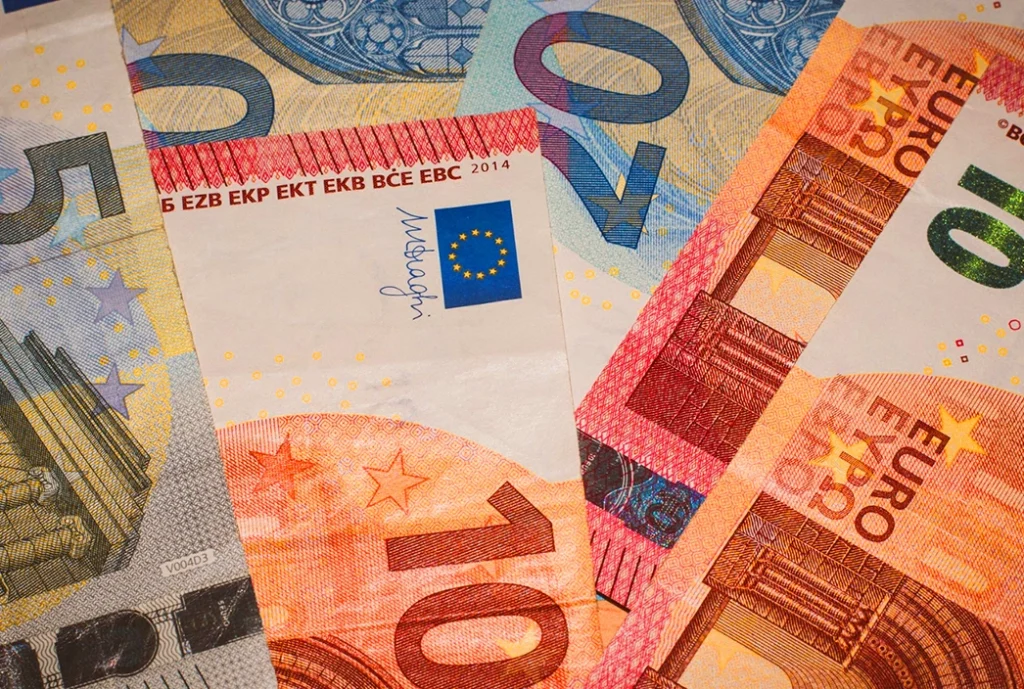
At the end of 2012 – five years after the signing of the Lisbon Treaty, the European Central Bank issued the first banknotes on which the single currency is written on the three alphabets of the EU – Latin, Greek and Cyrillic.