
Dr. Valentin Katrandzhiev
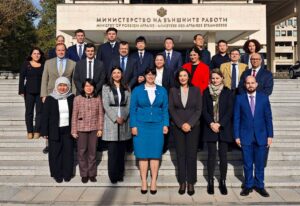
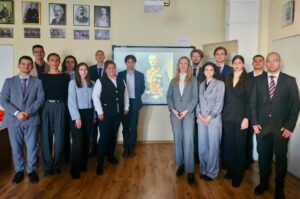
In July 2025, the Diplomatic Institute conducted an expert discussion & lecture presentation of the first edition of the specialized course ‘Diplomacy and Geopolitics’ for Bulgarian diplomats at senior and mid-career levels. The training run under the auspices of the political and professional leadership of the Bulgarian Ministry of Foreign Affairs.
The geopolitical backdrop for such a strategically tailored training is undoubtedly the ongoing systemic transformation of the international relations along with the rapidly changing security environment in the Black Sea region, the Middle East, and the growing military, hybrid and technological threats to Bulgaria’s national security.
The widespread digitalisation across the public sector, along with the introduction of new (incl. quantum) technologies and artificial intelligence (AI), has tremendously impacted the operational work of diplomatic services geopolitically. We must take into account both the positive and destructive effects of digitalization – particularly when applied as an instrument to attack the critical infrastructure and wage hybrid wars.
In order to determine the training’s thematic scope and structure it into an analytical and methodical framework, the actual course design has undergone extensive preliminary research. The balanced approach addresses general theoretical issues (in particular, the place of geopolitics with the system of scientific knowledge as an independent field of study and as an interdisciplinary research method) and tackles various topics related to applied geopolitics such as geostrategy and strategic culture; the relationship between geopolitics and diplomacy; the role of centres for strategic research and think tanks involved in the process of formulating and conducting foreign policy of leading states; the resource dimensions of geopolitics.
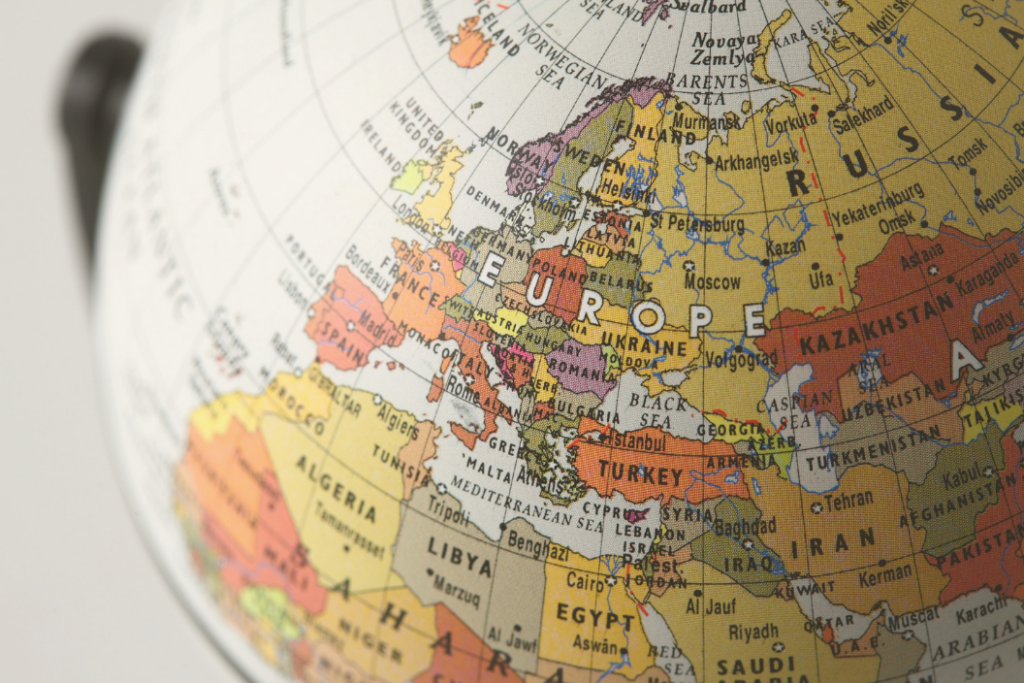
An extensive discussion on the geopolitical projections of the Wider Black Sea region, the Middle East and the Asia-Pacific ensured greater regional coverage of the training. The presentation provided a realistic assessment of the dynamically changing international environment and of the need for the Bulgarian diplomatic service to utilise applied geopolitics in the process of the country’s foreign policy shaping.
Diplomacy and Geopolitics within the Scientific Knowledge Framework
Diplomacy has been studied as an integral part of the historical and theoretical framework of international relations, international law, philosophy, political science, political economy, social psychology, cultural studies, journalism and other communications related disciplines. Given the significance of negotiations in diplomatic relations, diplomacy also borders the field of psychology. Via diplomacy, scientific knowledge explains the principles and mechanisms for establishing and developing inter-state relations, as well as concepts such sovereignty, national interest, national power, the balance of powers, the international order, etc. Diplomacy also shapes the models, mechanisms, and principles that govern the work of IGOs. The latter form the backbone of contemporary multilateralism.
Diplomatic reporting, analyses and communications (in the form of diplomatic cables, verbal notes, reports, expert and policy driven recommendations, to name a few) make the diplomat both a direct observer and participant in international politics. The contemporary diplomatic reporting and diplomatic memoir-writing provide a rich body of ‘raw’ material – based on true stories from the diplomatic practice – to be then further generalized and systematized by the research community. This shapes diplomacy into an instrument of scientific knowledge.
However, diplomacy is also an applied discipline and a profession. It is carried out through the functions of representation (protocol, symbolism, verbal and nonverbal communication, public and cultural diplomacy); negotiation (achieving a balance of interests and agreements); reporting and document production (incl. all aspects of information and analysis-driven activity); crisis response (crisis diplomacy – crisis management and tackling of international crises and conflicts); networking (skills necessary for working in multilateral and multicultural environments, capacity to build networks of contacts and relationships, lobbying skills and so on). The art of diplomacy is further honed through training, experience, exchange and interaction. This implies daily practical activities of diplomatic services and the foreign services staff both at institutional and professional levels.
Similar to law, medicine, engineering and other fields of science and professions, diplomacy both uses and generates new knowledge. Diplomacy is also regarded as a specific applied layer built upon scientific knowledge, thus transforming academic, abstract and theoretical concepts into concrete practical activities (e.g., the practice of international relations and international law has been based on already established theoretical knowledge).
Diplomacy uses scientific methods (situational, SWOT, geopolitical, strategic, and forecasting types of analysis, as well as statistical data). It represents a set of professional competences (related to diplomatic profession and diplomatic culture) and serves both as institution and a tool for implementing the state’s foreign policy and its national interests.
Geopolitics has emerged as an independent discipline embodying its own conceptual apparatus, research methodology, historical evolution of geopolitical thought, geopolitical concepts, and national schools of geopolitics. It is also an applied science, as it underpins foreign policy, diplomacy, national and international security.
Scientific knowledge views geopolitics through the domains of disciplinary knowledge such as: the geography-demography component (physical, political and economic geography, ethnography, demography, etc.); the political history component (world history, history of political thought, history and theory of international relations, political systems, ethnicity and religion, etc.); the military-strategic component (military strategy, naval strategy, air strategy, nuclear missile strategy, space warfare, war drones strategy, history of military art, the study of state’s military might, etc.); the economic component (global micro- and macro-economics, international markets, statistics, international trade and investment, studies related to energy and resources, transport); and the digital networks component (ICT, digital technologies, quantum technologies, AI, communications theories, etc.)
Within the cognitive process, geopolitics establishes itself through its explanatory function (for instance, explaining the patterns of geographical-spatial expansion and patterns of state conduct); its forecasting function (modelling global trends and development paradigms and providing scenario-based forecasts of crisis and conflict dynamics); and its instrumental function (a method for strategic planning of the state’s foreign policy activities)
In sum, two principal aspects underline the science and study of Geopolitics as an analytical framework.
Firstly, geopolitics is understood through its classical geographical-spatial, cultural-civilisational (incl. value-based) and modern networked dimensions.
The Anglo-Saxon geopolitical tradition emphasizes key geographical zones as key factors for global domination (the concept of Heartland, Sea Power, and Rimland). It is complemented by the German geopolitical tradition which outlines spatial expansion in relation to national identity and state viability. Moreover, the French and Italian schools, in turn, introduce cultural-civilisational and ideological elements into the analytical framework of geopolitics. Furthermore, The Russian geopolitical tradition emphasizes control over the Eurasian space, in opposition to Atlanticism, and the integration of political, historical, religious and cultural factors into the geographical-spatial dimension. Conversely, he Chinese geopolitical school leans on the foundations of the Confucian philosophical tradition, emphasizing order, stability and central authority. It rests on the premise of centre and periphery, controlled through vassal states and diplomatic strategies of ‘soft power’. Further emphasis is also placed on the concept of Tianxia (“All Under Heaven” – the world as a unified whole), whose modern continuation lays in the concept of Community with a Shared Future for Mankind (security, development, and cultural-civilizational exchange). Alternatively, the Indian geopolitical school is rooted in Vedic and Buddhist philosophical traditions, focusing on harmony, cosmic balance and morality. It focuses on geography as a factor for security and development, with particular attention to natural boundaries and conflicts with external conquerors. The concept of regional leadership in the Indian subcontinent is being formulated through the system of small and large kingdoms (mahajanapadas) and their dynamic interactions.
The classical dimension of geopolitics is complemented by the modern network-driven approach to analysing geopolitical processes and events. Territoriality has not lost its significance in contemporary geopolitics as spatial expansion (incl. expansion, control over resources, influence) remains a driving factor for many states. However, the main challenges for implementing the science and practice of geopolitics lies in adapting the classical geographical-spatial understanding (land, sea, air, space) to the new paradigms of networked security (for instance, the security of global value chains, control over strategic transport corridors and logistical hubs), digital-technological connectivity (technological corridors, data centres, etc.) as well as the resource-energy, food, and environmental-climatic, dimensions of geopolitics.
Secondly, in the context of the analytical framework, it is important to outline the interconnection between the concepts of geopolitics, geo-economics, and strategic culture. The classical geopolitics ensures access to and control over territories and resources and supports forging of alliances and collective security systems. In contrast, geo-economics serves as a tool for accomplishing the state’s strategic and geopolitical objectives – in particular, by means of factors such as trade and investment flows, infrastructural, energy, technological, food and other dependencies and constrains.
Strategic culture is shaped within the framework of national institutes for strategic studies (with a focus on strategic forecasting and planning). It derives from the cultural-historical and value-based models for the development of the state (incl. values, beliefs, historical experience, institutional continuity, and national memory). Strategic culture is an integral part of leading doctrinal documents, the strategic debate, and strategic statecraft, and is associated with addressing questions such as: Who we are? Who are our allies and friends? Who are our adversaries? What constitutes and encompasses national interest? How do we understand security? What is the role of diplomacy in achieving national strategic goals?
What are the Main Aspects of Linkage Between Geopolitics and Diplomacy?
| Aspect | Geopolitics | Diplomacy |
| Conceptual Linkage | Formulates concepts, paradigms, strategies, and forecasting scenarios. | Translates them into concrete action plans and policies (via collective security alliances, bilateral and multilateral diplomatic negotiations and diplomatic initiatives), and participation in IGOs. Example: The containment strategy implemented through NATO’s collective security system. |
| Shared Sphere of Governance – the International System | Provides the analytical framework for the distribution of power and exerting influence. | A tool for harmonizing interests, reducing tensions within the international system, and promoting the nation’s strategic objectives. Example: Diplomatic strategy for energy diversification in response to geopolitical vulnerability. |
| Shared Domains (Dimensions) of Governance | Diplomacy operates within the same domains which geopolitics analyses (for example: land, sea, air, outer space, resources, digital space, etc.). Example: space diplomacy – geopolitics of space; energy diplomacy – energy geopolitics. | |
| Impact on Strategic Culture | The strategic debate contributes to shaping strategic visions and competencies of the political elite. | Diplomacy serves as the format and channel (representation, negotiation, reporting, public diplomacy, and lobbying) for integrating these visions into the state’s operational foreign policy. |
| Shared Role of Forecasting | Constructs models of forecasting the evolution of international crises and conflicts. | Based on these models, diplomats develop their negotiation strategies and tactics for crisis management (crisis diplomacy). |
Geopolitics Related Competences for a Successful Diplomat
The diplomatic training’s key objective is to develop competence that enables diplomats to operate effectively in a geopolitical context. Therefore, the geopolitical component needs to occupy a central place in diplomatic reports, analyses and dispatches (cornerstone of the analytical and reporting work) of the Bulgarian diplomats. A successful diplomat cannot rely exclusively on established representational protocol, public and negotiation skills. They also ought to possess a body of knowledge and competences in the field of geopolitics.
- Analytical and academic competences: knowledge of classical and contemporary geopolitical concepts, theories and paradigms allows for a deeper understanding of the interests and strategies of the great powers in the international system. In addition, it is necessary to develop the capacity to work with spatial models, as well as geography and statistics related data. The ability to interpret physical and non-physical geopolitical dimensions – individually and in their dynamic interconnectivity (land, sea, air, outer space, digital space, etc.) – is one of the main geopolitical competences for the diplomat;
- Strategic and forecasting competences: since geopolitics constitutes not only an explanatory tool but also a forecasting one, the diplomat should possess forecasting capacity, incl. ability to formulate scenarios to anticipate international crises and conflicts. This requires grasp of forecasting scenario planning methods, risk analysis and assessment;
- Diplomatic communication and negotiation skills: the diplomat acts as an intermediary between academic knowledge, applied expertise and the mechanisms of political decision-making. This requires the ability to present complex and multifaceted geopolitical terminology in clear and comprehendible diplomatic language. Negotiation skills also involve the capacity to build trust while dealing with crisis situations and establish resilient networks of contacts. The diplomat ought to develop an ability to work successfully in a multicultural environment, given the importance of cultural-civilisational and value-based factors in geopolitics;
- Applied competences: a successful diplomat must be in a position to utilise modern analytical tools, such as geographical information systems (GIS), and data related to trade, investment, energy, transport corridor modelling and cybersecurity. Taking part in inter-agency coordination teams requires developing of a culture of cross-professional communication. This also includes the ability to ‘speak the language’ of the various expert communities and to analyse, synthetize, and integrate data and information from diverse sources.
In the age of global transformation and adaptation, the diplomat is not only the official representative and negotiator on behalf of the State in the international relations, but also an analyst, strategist, cross-cultural and cross-professional communicator and mediator. The ability to think geopolitically and act diplomatically comes up as the diplomat’s core professional competence.
Dr Valentin Katrandzhiev is a long-serving staff member of the Bulgarian Diplomatic Institute, engaged extensively in the fields of diplomatic training and strategic research.