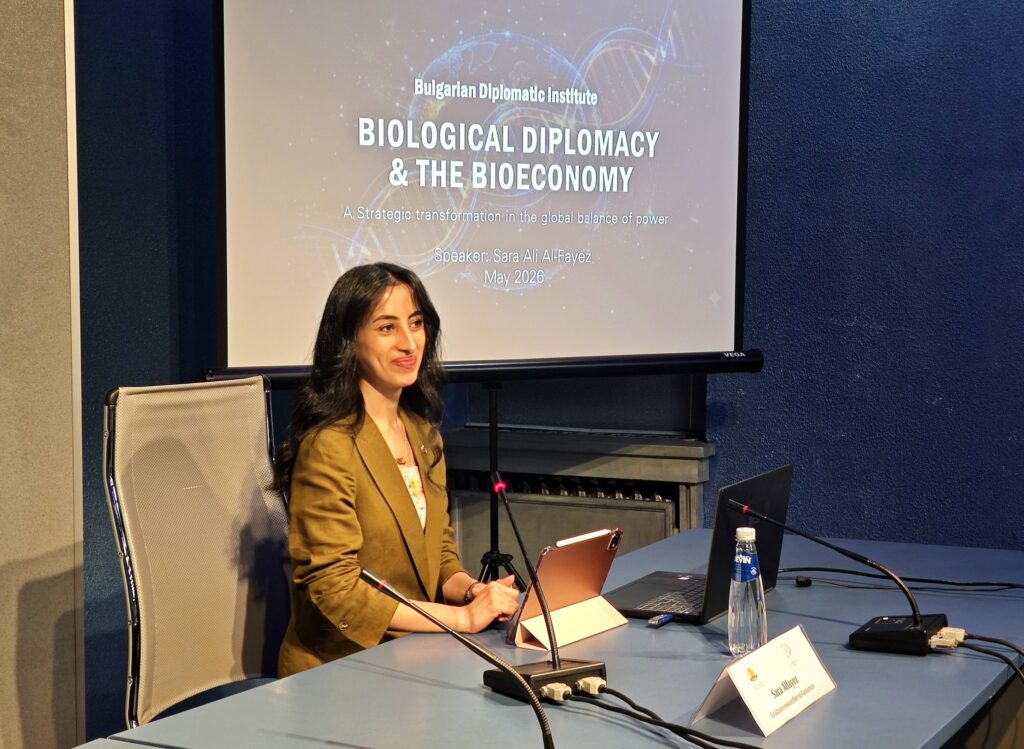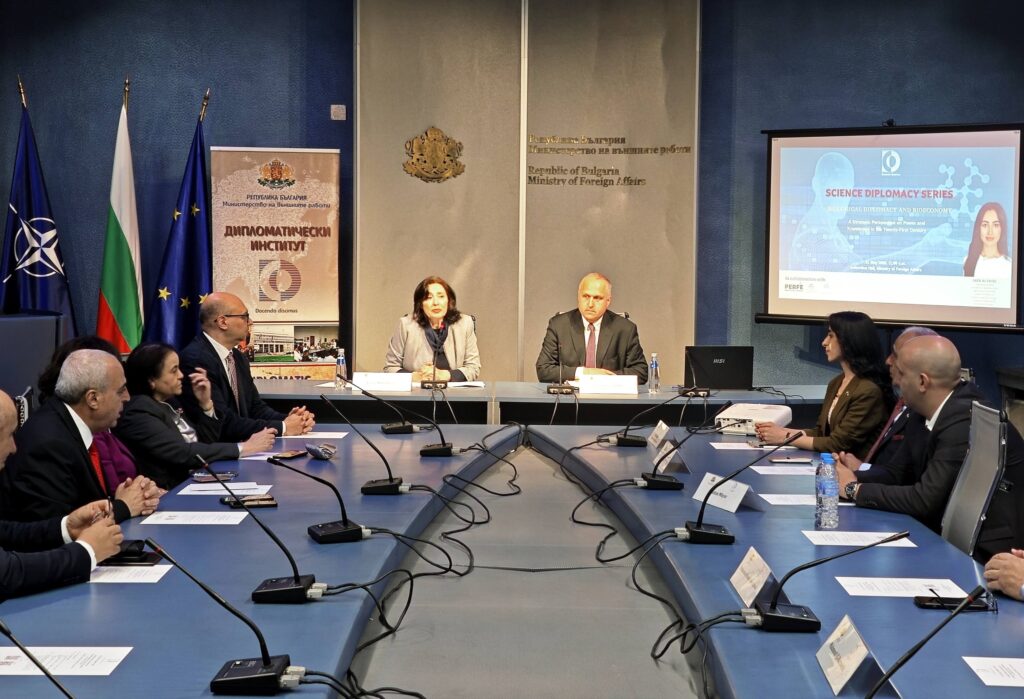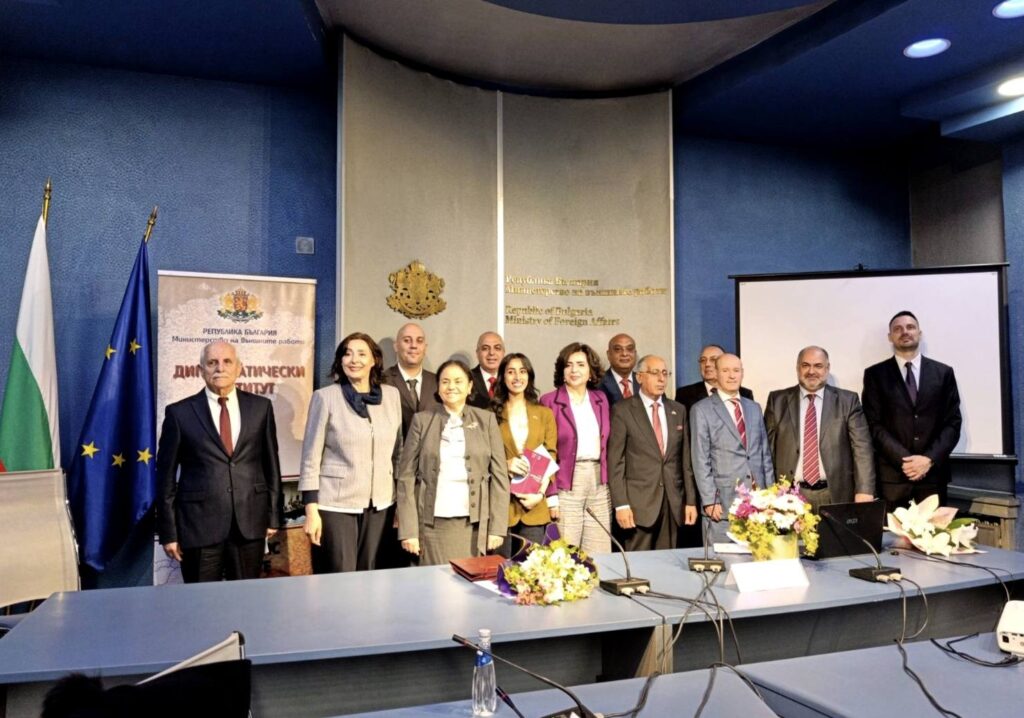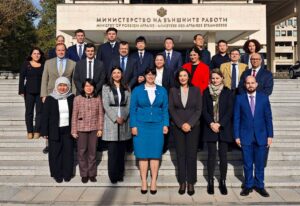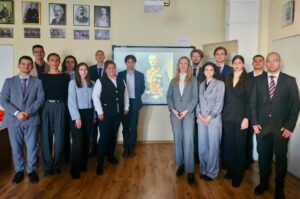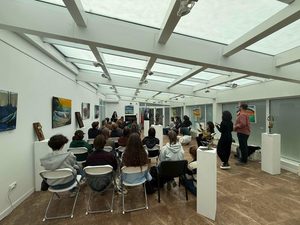

As part of the series of initiatives under the theme “Science Diplomacy”, the Bulgarian Diplomatic Institute had the pleasure of hosting a public lecture at the Antarctica Hall of the Ministry of Foreign Affairs entitled “Biological Diplomacy and Bioeconomy: A Strategic Perspective on Power and Knowledge in the 21st Century”, delivered by guest lecturer Sarah Al-Fayez, a Jordanian researcher specialising in genomics.
The event formed part of the Bulgarian Diplomatic Institute’s ongoing efforts to promote the role of science diplomacy as a key instrument of foreign policy and international cooperation. It brought together representatives of the diplomatic service and public administration, the foreign diplomatic corps, as well as the scientific and academic communities. The event was organised at the initiative of our partners from the Jordanian Association of Bulgarian University Graduates, in the context of the fruitful bilateral cooperation between Bulgaria and Jordan.
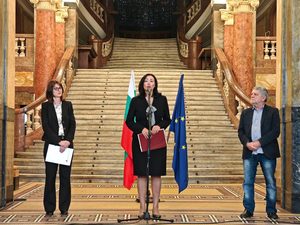
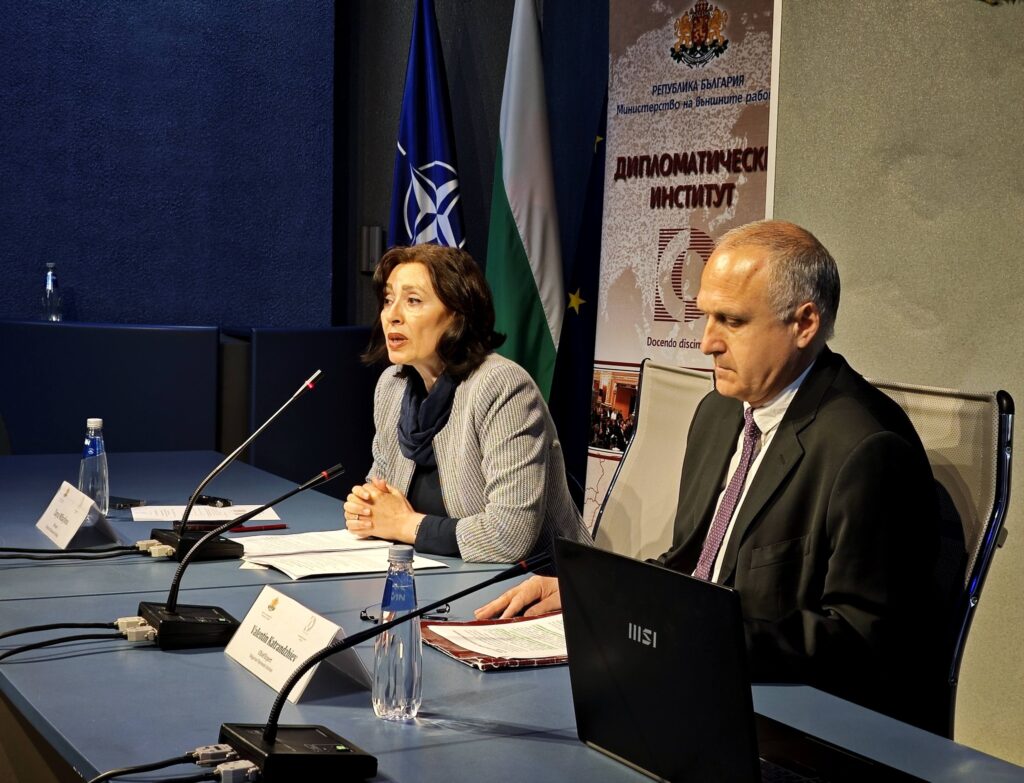
The event was opened by Ms. Tanya Mihaylova, Director of the Bulgarian Diplomatic Institute, who welcomed the participants and highlighted the importance of science diplomacy for contemporary diplomatic practice and the work of the Bulgarian Diplomatic Institute. She emphasised that science diplomacy is a means of strengthening international relations and regional cooperation and of building bridges between countries.
Dr. Valentin Katrandzhiev, Chief Expert at the Bulgarian Diplomatic Institute, highlighted the increasingly important role of science, innovation and research in diplomatic processes. He described science diplomacy as a strategic instrument without which contemporary diplomacy could not function effectively.
Our guest lecturer, Ms. Sarah Al-Fayez, presented the main aspects of biological diplomacy and the bioeconomy, focusing on the relationship between the biological sciences, genomics and strategic decision-making processes at the global level. She examined the importance of scientific knowledge as a factor for influence, development and international cooperation, emphasising that science and innovation are emerging as key forces at the heart of the shaping of 21st-century geopolitics. “Through science, we can develop our countries,” she noted, “rather than relying solely on powerful weapons or armies.”
During the discussion that followed the lecture, participants exchanged views and comments, once again highlighting the important role of scientific activity in cross-border cooperation.
We were pleased to welcome the Ambassadors of Morocco, Lebanon and Palestine to Bulgaria, as well as representatives of Jordan, Libya and other diplomats and experts.