Bisserka Benisheva
Immediately after its accession to the European Union, Bulgaria joined the discussion about the reform of the EU Treaty.
After the “Treaty establishing a Constitution for Europe” failed to be ratified following the no-votes in the French and the Dutch referendums in 2005, as well as the prolonged consultations between the EU Member States that followed, a consensus was reached in the middle of June, 2007, that negotiations should be launched for the purpose of reforming the EU Treaties. The European Council meeting of June 21-21, 2007, decided to schedule an Intergovernmental Conference and adopted a mandate for the negotiations aimed at amending the EU Treaties.
Along with its institutional restructuring needed for participation in the EU decision-making process in its capacity of an EU Member State, Bulgaria had to urgently prepare its position on the reforms of the Treaties. This position had to be formulated by the Ministry of Foreign Affairs – in so far as this ministry had the experience and the expertise gained from its participation, as an observer, in the Convention that had to draw up the “Treaty establishing a Constitution for Europe”. This position had to be adopted afterwards by the Bulgarian Council of Ministers.
The Intergovernmental Conference began on July 23, 2007. Portugal, the country holding the rotating Council Presidency at the time, was making an effort to reach a consensus on the open issues and, among these – the issue of spelling the single EU currency in the official languages of the EU Member States. A couple of Member States, namely Bulgaria, Slovenia, Lithuania, and Latvia could not agree with the proposal that their language versions, which were absolutely equivalent to all other EU language versions, had to adopt a spelling of the single currency that was different from the spelling in their own national languages.
As far as Bulgaria was concerned, the single EU currency had to be spelled in Cyrillic as „Еуро“. Slovenia, which uses the Latin alphabet, also had a problem because the single currency in its national use is spelled as „evro“, including in the Slovenian Law on National Bank, as Slovenia was making preparations to accede to the Eurozone. Lithuania and Latvia had a similar problem because, in spite of using the Latin alphabet, they did not spell in their national languages the single currency as “euro”. With respect to the four countries, this problem boiled down to their national identity for which reason they did not agree with the proposal made by the Portuguese Council Presidency.
Against the background of all other unresolved issues, including the institutional arrangements, the number of college commissioners, the introduction of double majority in the Council voting procedure, and numerous other issues related to the Member States’ participation in the decision-making process, this particular issue had been left aside from the discussions despite the fact that the four countries kept expressing their positions very strongly.
The negotiations for reforming the EU Treaty were progressing, with the Portuguese Council Presidency making an effort to reach a consensus so that the document could be signed in December, 2007, in order to be harmonized with some of the new documents – in this case, the Lisbon Treaty. On October 15, 2007, a meeting was scheduled for an Intergovernmental Conference on a foreign ministers’ level, which was supposed to discuss the draft Treaty on Reforming the EU Treaties (this was the working title of the document and remained as such until the end of the negotiations), as well as to prepare an informal meeting of the heads of state and government that had to take place on October 18-19. The Intergovernmental Conference had been scheduled within the framework of the regular monthly Council meeting held in Luxembourg and entitled “Common issues and foreign relations”.
In the meantime, there was intensive correspondence between Bulgaria, the EU, and the Central European Bank on the sensitive issue of how the single EU currency had to be spelt. The arguments of the Bulgarian party were as follows: the spelling of the EU single currency in the Cyrillic alphabet has already been regulated in the Bulgarian language version of the Bulgarian EU Accession Treaty where this currency is spelt in Cyrillic as „евро“ throughout the whole Treaty. This thesis launched by a team of the Bulgarian Diplomatic Institute attached to the Minister of Foreign Affairs relied, quite optimistically, on this country’s Accession Treaty as a guarantee that it was an argument enough to honor the Bulgarian position.
Meanwhile, Nikolay Vassilev, Minister for Public Administration, was doing his best to present visual argumentation in favor of the Cyrillic alphabet on the basis of some documents drawn up by the Institute of Bulgarian Studies attached to the Bulgarian Academy of Sciences. He was doing this in the relevant correspondence, as well as at varied meetings organized with the European institutions. At a meeting with the Director General of the Council Legal Service, Jean-Claude Piris, he and his team presented some alphabet books but the Legal Service cleared itself with the European Central Bank. There was an exchange of letters between them and Jean-Claude Trichet, the then president of this bank. Another meeting was organized between the EU Commissioner in charge of language diversity and Gergana Passi, the then Bulgarian Foreign Affairs Minister, at which the Bulgarian team put the Bulgarian arguments on the table again but, notwithstanding the sympathy expressed in relation to our cultural identity, the European Commission kept insisting that all reserves had been expressed by the European Central Bank as the institution having exclusive competence to “deal with” the single European currency. The President of the European Central Bank kept arguing that the name of the single currency is a term used in all official EU languages, that this name is not to be translated, and also that it does not derive from the name of Europe (just repeating the arguments put forward by Bulgaria and the other Member States that were affected by the language versions of the draft Treaty).
In this environment and, against the background of preparations for the Bulgarian position needed for the foreign ministers’ meeting on October 15-16 in Luxembourg (where an Intergovernmental Conference was scheduled on the draft Lisbon Treaty), in early October, the vice prime-minister and Minister for Foreign Affairs, Ivaylo Kalfin, convened a working team of diplomats from the EU-related departments of the Ministry to discuss the situation. The working group concentrated on the sensitivity of the issue in the public space, as well as on the fact that the Accession Treaty, although being on the same level of all other EU Treaties within the hierarchy of the European legal acts, was not a sufficient guarantee for success of the national position because the amendments to the main EU Treaties could lead, afterwards, to “equalization” of the Bulgarian EU Accession Treaty with the changes that had occurred in the main Treaties.
The correspondence with the President of the European Central Bank and the meetings held with the Council Legal Service and with the European Commission did not stir any optimism over the success of the national position. Despite the assertions of the then Bulgarian EU Commissioner (and formerly Bulgarian Chief Negotiator) that this issue had already been settled during the accession negotiations, the Central European Bank insisted that this had been a technical error that could be rectified via the new arrangements.
Time was getting on, which called for urgent consideration and structuring of the relevant arguments, as well as for defining the relevant tactics. The option to block the consensus on the future Lisbon Treaty was rejected as politically unacceptable from the perspective of the European interest because Bulgaria was already part and parcel of this interest. At the same time, the national interest had to be also honored. As regards the arguments, the diplomatic team drew up a non-paper in which it based the Bulgarian position on the theses listed below, in addition to the cultural identity-related arguments which had been presented that far:
- Reference to the declaration attached to the Bulgarian Accession Treaty concerning the status of the Cyrillic alphabet, which Treaty had been ratified by all EU Member States and read: “By recognizing the Bulgarian language as an authentic language of the Treaties and an official and working language used by the EU institutions, the Cyrillic alphabet is getting the status of one of the three official alphabets of the European Union. This particular element of the European cultural heritage constitutes the Bulgarian contribution to the languages and the cultural diversity of the EU.”
- Reference to the conclusions drawn by the European Council meeting of December 15-16, 1995, held in Madrid, concerning the single EU currency named “Euro”, namely: “The European Council believes that the name of the single EU currency has to be the same in all official EU languages bearing in mind the existence of varied alphabets.” (European Council, Madrid, December 15-16, 1999, Scenario for the transition to a single European currency, paragraph 2)
It was the Cyrillic alphabet that was going to prevent the introduction of the spelling of „еуро“ into the Bulgarian language because the very EU decision concerning the unity of the term in all languages allows for some differences provided that the relevant alphabets are different. This also accounts for the fact as to why the Euro-notes have the “euro” spelt in Greek (where the alphabet is different from the Latin one), in addition to the spelling in the Latin alphabet.
The national position had to be first justified and then defended before our European partners. This was the first challenge facing the Bulgarian diplomacy in the first year following the country’s EU accession so we were well aware of the fact that the prestige of the brand new EU Member State, which had to justify and withstand its own position, was put to the test. The major key to success in this case was the Bulgarian institutional unity because it was these institutions that had to defend the Bulgarian position in addition to the fact that, in relation to the tactics, there had been a proposal that Bulgaria had to express reservations about signing the Agreement for Stabilization and Association of Montenegro that was being prepared to be signed on the very same date, October, 15. The reason behind this was the language draft to be agreed upon of the Agreement where there had already been a proposal that the single EU currency should be spelled in Cyrillic as „еуро“. To block the consensus on one issue in return for a decision that should be satisfactory to another Member State on quite a different issue, is a tactical “trick” that is sometimes used in the EU decision-making process. In this context, Bulgaria had a bitter experience from 1993 when the entry into force of the commercial provisions of the Bulgarian EU Association Agreement were blocked for 7 months because of disputes between the Member States over a regulation concerning the trade protection measures. Notwithstanding the fact that everybody was trying to assure us that this was only an internal dispute and had nothing to do with the Association Agreement, a couple of countries did not give their consent before an agreement had been reached on the disputable regulation.
In this particular context, Bulgaria made good use of its former bitter experience by transforming this experience into tactics while defending its national position during the negotiations for the draft Lisbon Treaty. After having received the relevant instructions, the Bulgarian permanent representative in Coreper expressed Bulgaria’s reservations over signing the Montenegrin Association Agreement. This act was followed by numerous telephone calls from Podgorica to Sofia on all possible levels – presidential, foreign minister’s, European minister’s, etc. The Bulgarian ambassador to Montenegro was invited to the Montenegrin Ministry of Foreign Affairs to explain why Bulgaria should suspend signing of the Agreement. The Bulgarian party kept explaining that the Bulgarian position had nothing to do with Montenegro whose European integration this country welcomed and supported but that it had to do with another issue that was essential to this country. Particularly dramatic were the telephone conversations between the Bulgarian Foreign Affairs Minister, Ms. Gruncharova and the Montenegrin Foreign Affairs Minister who rang every hour to inquire whether there had been any new developments because, he said, he was intending to leave any moment for Luxembourg. He kept underlining the expectations and the eagerness of his country to have the Association Agreement with the EU signed as soon as possible. On her part, Ms. Gruncharova was trying to assure him that Bulgaria was going to do everything within its powers to resolve the situation in a way satisfactory to both countries. The Montenegrin diplomatic demarches from a much higher political level – the level of the president and of the foreign minister, only heightened the tension among the Bulgarian diplomatic team working on the national position in all areas of the negotiations for the draft Lisbon Treaty.
During the week before the meeting scheduled to take place on October, 15-16 in Luxembourg, we demanded consultations with the Portuguese rotating Council Presidency, so we left for Brussels. A little prior to the consultations, the Portuguese permanent representative in Brussels had given an interview concerning the negotiations in which he had expressed his reservations about “the position of a couple of EU Member States which, having hardly joined the EU, were raising their national flags and hindering the consensus”.
During the consultations, we presented our arguments which had already been disseminated among the Member States in the form of a non-paper. In addition to the national identity, we also referred to the information already incorporated into the EU documents, namely the 1995 conclusions concerning the single EU currency and Bulgaria’s declaration concerning the Cyrillic alphabet attached to its EU Accession Treaty. As a result, someone suggested that we would better draw up a declaration for the foreign ministers’ meeting in which to specify the arguments of the Bulgarian party concerning the spelling of the EU single currency in the future Lisbon Treaty as a precondition for “lifting” our reservations about the Montenegrin EU Accession agreement. The negotiations concerning the text itself were rather difficult because we were seeking a solution which had to satisfy both the Bulgarian party, as well as the European Central Bank, without providing conditions for more than one spelling of the single EU currency (bearing in mind the requests of the other three Member States).
The coordination of the draft declaration with the Bulgarian foreign minister was done by phone. Firstly, the foreign minister edited the text for us in order that we could be sure that lifting the reservations about the Montenegrin Association Agreement was going to be paralleled by adopting the Bulgarian arguments concerning the spelling of the single EU currency. Secondly, we coordinated the edited texts, on the spot, with the Portuguese Council Presidency and the Legal Service of the Council General Secretariat.
During the October 15 Luxembourg meeting, which was held within the framework of the Intergovernmental Conference on the draft of the Lisbon Treaty, the individual ministers declared their countries’ positions on the draft Treaty’s pending issues. As regards the spelling of the single EU currency, there were well-argumented contributions made by the Bulgarian foreign minister, as well as by the foreign ministers of Slovenia, Lithuania, and Latvia. At the end of the discussion, Luis Amado, the Portuguese foreign minister, after his consultations with the Council General Secretariat’s Legal Service, summed up the issues that had received the overwhelming majority of the votes of all those present, and announced that they were going to be incorporated into the future Lisbon Treaty. On the issue of how the single EU currency was going to be spelled, he announced that only the Bulgarian arguments had been approved and adopted. After the end of the meeting, one could feel the disappointment of the Lithuanian and the Latvian representatives; but there was also a jocular exchange of remarks between Mr. Kalfin and the Slovenian foreign minister, Dimitrij Rupel, who said he did not know how he was going to get back to Ljubljana and what explanations he had to give to the President of the Slovenian National Bank. In return, Mr. Kalfin suggested that they could well use the Cyrillic alphabet to settle their problem with the spelling of the “euro”.
All this was followed by a special ceremony where the Bulgarian foreign minister, along with all other 26 foreign ministers of the EU Member States, signed the Agreement for Stabilization and Association of Montenegro. This is how Bulgaria kept its promise that it was going to find a solution to the situation and not injure, in any way, the Montenegrin interests. Today, Montenegro is already engaged in EU accession negotiations and Bulgaria has been rendering to the Montenegrins expert assistance.
A couple of days after the foreign ministers’ meeting of October 18-19, there was an informal meeting of the heads of state and government which was expected to reach a consensus on the draft Lisbon Treaty. At this meeting, Bulgaria was represented by its President and Minister of Foreign Affairs where they received the support of all EU Member States concerning the spelling of the single EU currency in Cyrillic. The end of these negotiations was followed by a final formulation of the language versions of all EU Member States’ official languages. On December 18, 2007, the Bulgarian prime-minister, along with all other heads of state and government of the EU Member States, signed, at a festive ceremony held at an old abbey not far from Lisbon, the Lisbon Treaty. This meeting was followed by intensive work on the preparations for the implementation of the new arrangements, as well as by expectations that the ratification of the Lisbon Treaty could be completed and the Treaty itself could enter into force by June, 2009, because of the forthcoming elections for the new European Parliament.
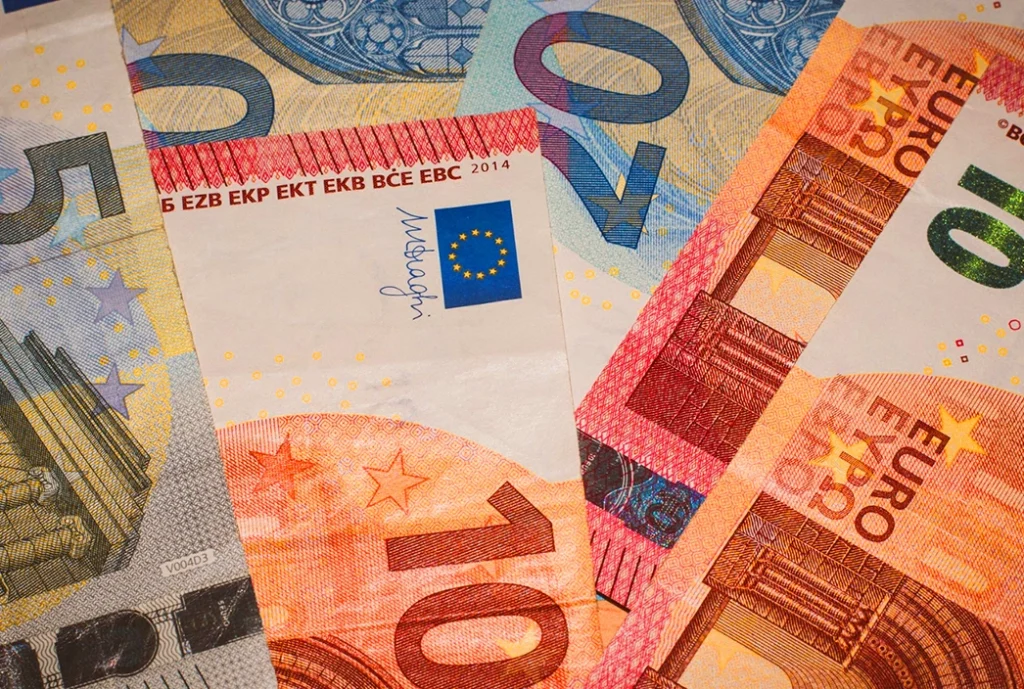
In late 2012, five years after the negotiation of the Lisbon Treaty, the European Central Bank issued the first banknotes with the single EU currency spelled in the three European alphabets – the Latin, the Greek, and the Cyrillic alphabet.
Ambassador Bisserka Benisheva is a carrier diplomat with an EU profile. She was Director for EU Affairs (1997-2001) and Director General for EU Affairs (2007-2012) at the Ministry of Foreign Affairs, a member of the core team negotiating association (1992) and accession (2000-2004) of Bulgaria to the EU. Ambassador Benisheva was Extraordinary and Plenipotentiary Ambassador of Bulgaria to Ireland (2003-2007) and to Hungary (2012-2016). Currently she is Director for EU Affairs at PanEuropa Bulgaria.