1. Your Excellency, welcome to Bulgaria on your first visit to our country! You have an impressive and extensive political career. What were the decisive factors in establishing peace in Timor Leste – a process you were personally involved in?
The resolution of the conflict in Timor-Leste was made possible by many factors or events happening almost all the same time. One, a major financial crisis exploded in East Asia and Southeast Asia hitting hard Indonesia, causing students to rebellion and the demise of the Suharto regime. A new president was put in place, a technocrat close to President Suharto, Vice President B J Habibi, an aeronautics engineer. President Habibi pushed for the reform agenda and resolution of the Timor-Leste problem. So, in 1999, a referendum was held, and almost 80% of the people voted to separate from Indonesia.
In addition, the international community, particularly the United Nations, Portugal, and other friends of Timor-Leste, played a crucial role in ensuring that the referendum was possible and that our people’s choice was respected. Our decades-long resistance, the courage of our people, and the solidarity we received from across the world were equally decisive in bringing about peace and independence.
2. Timor-Leste is one of the youngest countries in the world. How do we build a state in the 21st century? What were the main challenges after Timor-Leste declared its independence in 2002?
Healing the wounds of the past, reconciling our communities, putting the past behind, honoring the victims and martyrs, no pursuing revenge. Indonesia showed statesmanship and even wounded in their national pride, leaders and society showed their wisdom and statesmanship and accepted our hand of friendship.
At the same time, we faced the urgent task of creating institutions almost from nothing – schools, hospitals, courts, security forces – while addressing poverty, unemployment, and the basic needs of our people. State-building in the 21st century meant combining traditional values of solidarity with modern democratic governance, always guided by respect for human rights and the rule of law.
3. What are the current relations of Timor-Leste with its neighbors in the Indo-Pacific region? How does the country maintain a balanced foreign policy in the current geopolitical transformations in the world?
Timor-Leste enjoys excellent relations with all our neighbors. With Indonesia, our former adversary, we now have a relationship of trust and cooperation that is a model of reconciliation. With Australia, despite past disputes over maritime boundaries, we managed to reach a historic agreement on the Timor Sea through dialogue and international law. This shows that even the most difficult disagreements can be resolved peacefully.
We are also strengthening ties with ASEAN, where Timor-Leste is preparing to become a full member. This will deepen our integration in Southeast Asia and allow us to contribute to regional stability and prosperity. At the same time, we maintain strong relations with Portugal, the European Union, and the Community of Portuguese Language Countries, which connects us to partners in Africa and Latin America.
In today’s complex geopolitical environment, Timor-Leste does not align exclusively with any major power. We cooperate with the United States, China, India, Japan, and others, while always prioritizing peace, dialogue, and respect for international law. Our foreign policy seeks balance – to protect our sovereignty and contribute to regional peace and stability in the Indo-Pacific.
4. Mr. President, you were the co-recipient of the 1996 Nobel Peace Prize for your efforts towards a just and peaceful solution to the conflict in East Timor. According to you, what is most important for humanity to co-exist in peace in today’s world?
We must have the audacity to rise above pettiness and the worst instincts for revenge, reach out to the enemies of the past, embrace each other, and together build peace and prosperity for all.
Peace also means addressing poverty, inequality, and climate change, because wars are often born from despair and injustice. If humanity invests in education, justice, and sustainable development, then reconciliation and peace will be lasting.
5. Finally, in which directions could the bilateral relations between Bulgaria and Timor-Leste be further developed?
I was so pleased with my visit to Bulgaria, very impressed with the transformation from a poor Soviet backyard to be an advanced economy, relatively prosperous country.
We see opportunities to learn from Bulgaria’s experience, and we can cooperate in areas such as education, agriculture, renewable energy, and information technology.
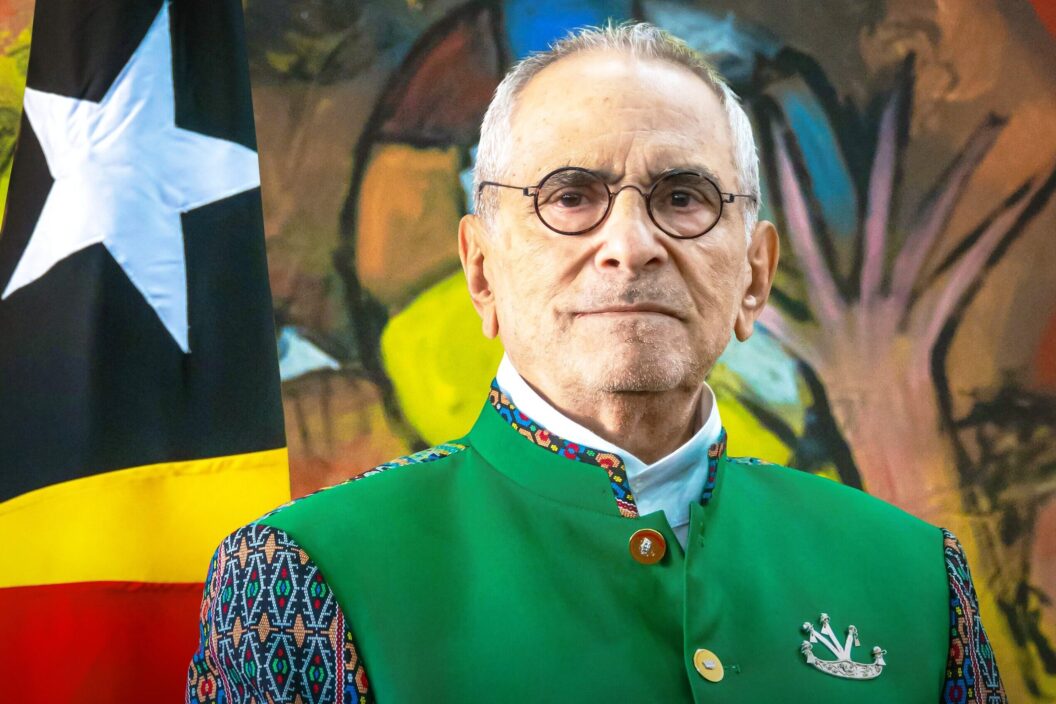
The President of the Democratic Republic of Timor-Leste, H.E. Mr. José Ramos-Horta, is the holder of the Nobel Peace Prize (1996), awarded on the occasion of his efforts to achieve peace and independence for Timor-Leste. After completing his law degree in the United States, Ramos-Horta returned to Timor-Leste and became involved in the independence movement but was eventually forced to flee because of his involvement. After returning, he left the country again as a result of the Indonesian invasion in 1975. He settled in Sydney, Australia, and spoke out against human rights violations by the Indonesian military and proposed a peace plan to end the violence in his country. He became the country’s leading international spokesman, including at the United Nations. He returned in 1999 after the establishment of an UN temporary administration in the country. In 2000, he became foreign minister and in 2006 he took office as prime minister. He was elected president in 2007 and suffered an assassination attempt in 2008. Despite a difficult recovery process, he served out his term and in 2022 he again won the country’s presidential elections convincingly.
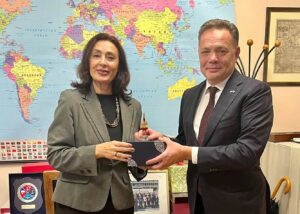
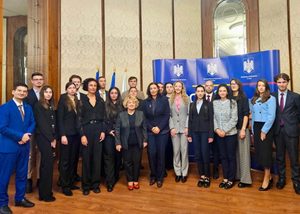
[*] This interview took place within the framework of the working visit of H.E. Jose Ramos-Orta in Bulgaria in April 2025, during which he gave a public lecture titled ‘Eastern Timor: a vibrant democracy. From conflict to reconciliation and peace’, organized from the Diplomatic Institute.